
Golden Easter Treasures: The Artistry of Fabergé Eggs

Eggs have been a hot topic recently, with prices for these Easter basket essentials swinging up and down over the last few months! But there’s one type of egg that has always been considered priceless…the renowned Fabergé eggs.
The story of Fabergé eggs is a fascinating tale of opulence and exquisite craftsmanship. The House of Fabergé was commissioned to create these golden and bejeweled eggs by Russia’s Imperial family, the Romanovs, between 1885 and 1917. Each egg was not only a treasured gift, but also a symbolic masterpiece—and gold played a central role in their creation.
How The First Fabergé Egg Was “Hatched”
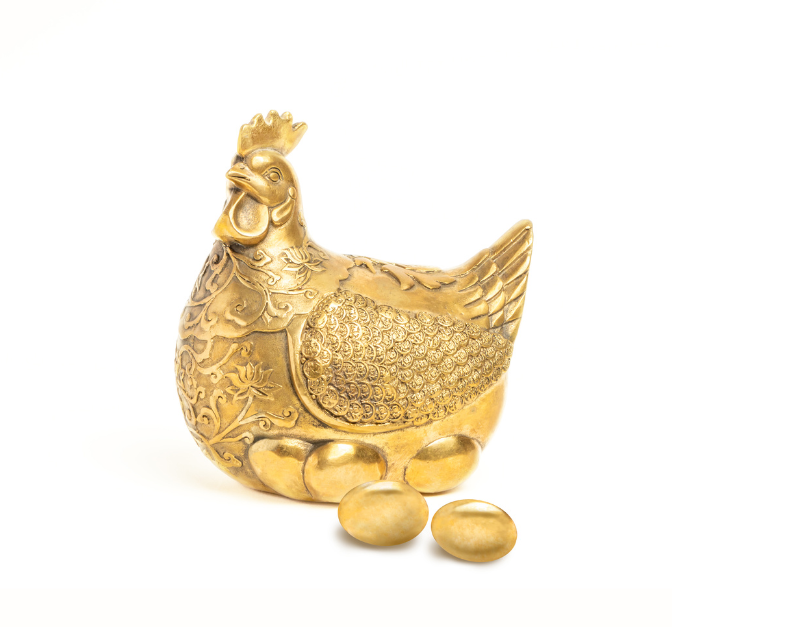
It all began in 1885, when Tsar Alexander III commissioned Fabergé to create the first Imperial Easter egg for his wife, Empress Maria Feodorovna. Known as the Hen Egg, it was very simple on the outside—white enamel over gold—but it contained intricate surprises, including a golden yolk, which opened to reveal a gold hen, which enclosed a replica of the Imperial crown and a precious ruby pendant. The gift must have delighted the Empress, as it began a long tradition of Fabergé egg gift-giving which continued under Tsar Nicholas II, who commissioned two eggs per year – one for his mother and one for his wife. Fifty Imperial eggs were made in total, 43 of which survive today.
The Importance of Gold in Fabergé Eggs
Gold played a prominent role in the crafting of all the Fabergé eggs, both physically and symbolically. Here are some of the ways this precious metal became essential to the creation and legend of Fabergé eggs:
Structural Base and Framework
- Most Fabergé eggs were built around a solid gold core or frame, providing structural integrity and an ideal base for enameling, gemstone setting, and engraving.
- The gold used was of various purities (typically 14k to 18k), and Fabergé’s craftsmen skillfully alloyed it with other metals to achieve desired colors such as rose, green, or white.
Surface Decoration and Detailing
- Gold was chased (decorated by indenting the metal from the front), engraved, and worked into delicate filigree patterns, often adorned with diamonds, rubies, sapphires, or pearls.
- Many eggs featured gilded miniatures, such as portraits, religious icons, birds, flowers and other nature-inspired creations. The Coronation Egg (1897), one of the most famous of all the Fabergé eggs, housed a tiny replica of the Imperial coach made of yellow gold with black enamel wheels and rock crystal windows.
A Symbol of Royal Power
- As it had for centuries, gold symbolized wealth, divine right, and eternity—important concepts to the Romanovs.
- Its use reinforced the association between the Tsar’s divine authority and the opulence of the Russian Empire.
Fabergé’s Craftsmanship
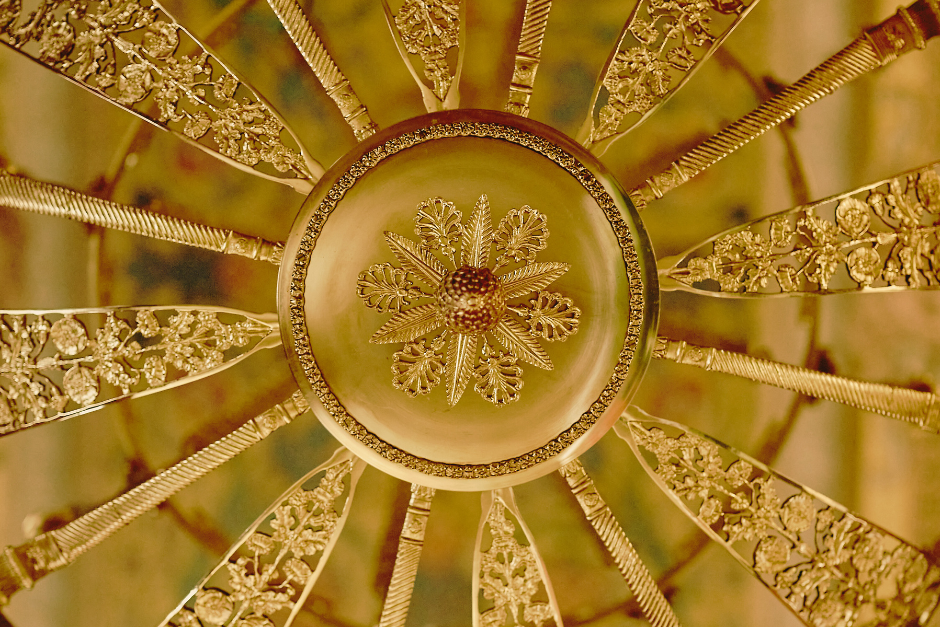
The House of Fabergé, led by Peter Carl Fabergé, was a creative powerhouse where master goldsmiths combined artistry, precision engineering, and centuries-old craftsmanship to produce some of the most exquisite objects ever made. Here, the master goldsmiths, enamellers, and jewelers who crafted the Imperial eggs used innovative techniques like:
- Guilloché enameling over engraved gold surfaces. This was one of Fabergé’s most recognizable signatures, a process that combined gold engraving with colorful translucent enamel.
- Alloying and coloring gold. Fabergé’s artisans were masters at creating colored gold by alloying pure gold with other metals. These variations allowed a painterly use of the metal—Fabergé wasn’t just building objects, he was actually sculpting and painting with gold.
- Lost-wax casting. This technique involves creating a wax model, which is then melted away, leaving a hollow mold into which the molten metal is poured. This was a key method for casting many of the tiny golden sculptures hidden within each egg.
- Micromechanics. The eggs and their tiny interior surprises incorporated precise hinges, clasps, spring-loaded openings, musical mechanisms, and complex automatons — many meticulously crafted from gold.
These embellishments were typically done by hand with microscopic precision—a reflection of the incredible skill Fabergé demanded from his craftsmen. Each egg could take up to a year to complete. Check out the fascinating details (with photos) of each Imperial egg HERE.
A Tragic Fate

The Romanovs were overthrown during the Russian Revolution and the family was executed by Bolsheviks in 1918, marking the end of their long reign. Many of the Imperial eggs were subsequently confiscated, lost, or sold abroad. They passed through the hands of collectors, and today many reside in museums and private collections. Seven of these masterpieces have never been found. Fabergé eggs remain not just relics of lost royalty but icons of artistic excellence revered by master jewelers (and those of us who appreciate their craft) to this day.
The Fabergé Legacy
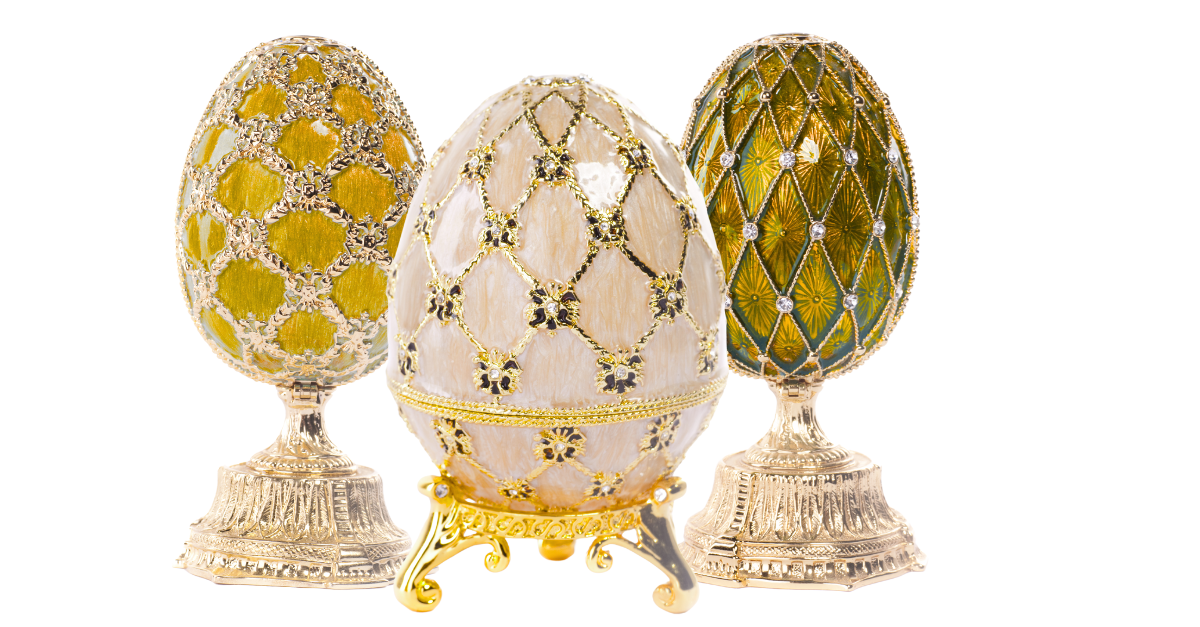
Fabergé’s golden eggs are one of the most amazing series of creations in the history of gift-giving, goldsmithing and jewelry-making. Today, the Fabergé brand is owned by a company called Fabergé Limited, which continues to make a series of exquisite, egg-themed gifts inspired by the iconic Imperial Easter eggs.
You can obtain your very own Fabergé egg today for your loved one, if you have the means. The jeweler offers “surprise lockets,” pendant earrings, and even a series of limited-edition egg objets d’art (starting at $60,500). Let us know if you get one, we’d love to see it in person!

With GOLD prices on the rise, this is an EGGcellent time to get top dollar on your gold and other precious metal scrap from Noble Metal Refining. CLICK HERE to get started.